

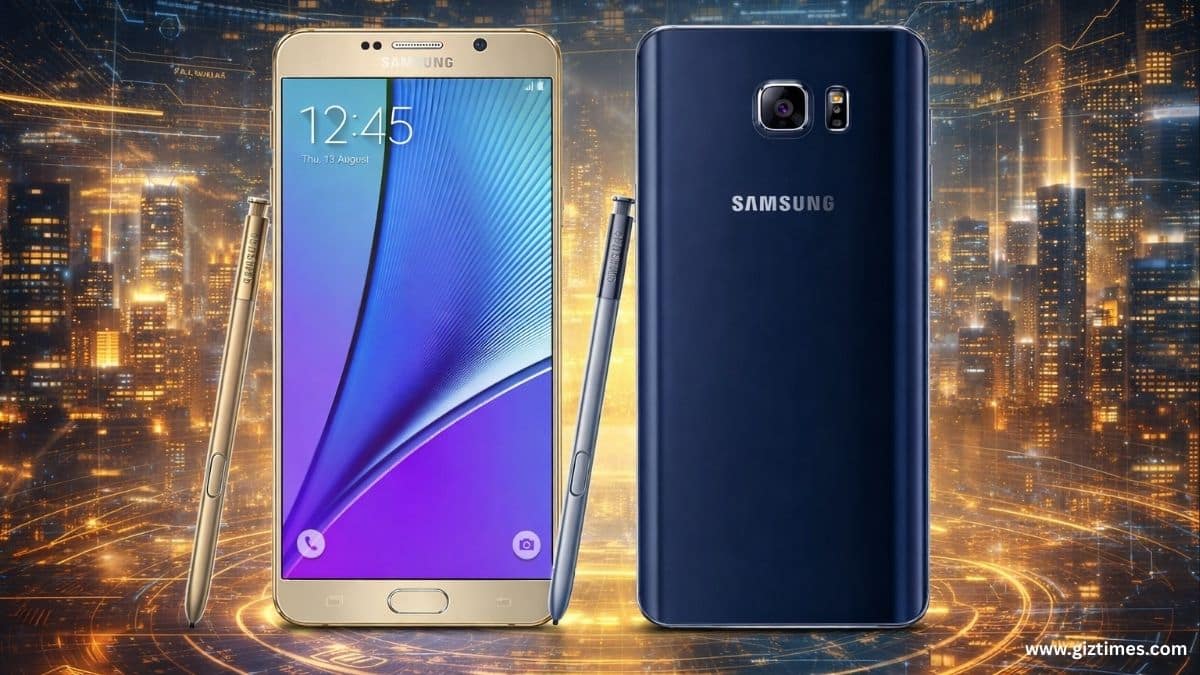
The Samsung Galaxy Note 5 was announced on 13 August 2015 and released globally on 21 August 2015. It came as the successor to the Galaxy Note 4 and was later replaced by the Galaxy Note 7. Samsung discontinued the device around September 2017 as newer flagship phones entered the market. At launch in India, the 32 GB model was priced at around ₹53,900 and the 64 GB version at about ₹59,900.
The Galaxy Note 5 brought a big design change compared to earlier Note models. It featured a glass front and back with a metal frame, similar to the Galaxy S6 series. The phone measured 153.2 × 76.1 × 7.6 mm and weighed 171 grams. It was available in Black Sapphire, Gold Platinum, White Pearl and Silver Titanium. While many users liked the premium look and feel, Samsung removed two features that were present in the Note 4: the removable battery and the microSD card slot. This decision disappointed many long-time Note users.
The phone had a 5.7-inch Super AMOLED display with a resolution of 2560 × 1440 pixels. The screen was protected by Corning Gorilla Glass 4 and delivered sharp visuals with around 518 pixels per inch. In 2015, it was considered one of the best smartphone displays available.
Inside, the Galaxy Note 5 was powered by the Exynos 7 Octa 7420 processor built on a 14 nm process. It had 4 GB of LPDDR4 RAM, which was very high at that time. Storage options included 32 GB and 64 GB with UFS 2.0 technology, but there was no option to expand storage. The device handled gaming, multitasking and everyday use smoothly and was seen as one of the fastest Android phones of its year.
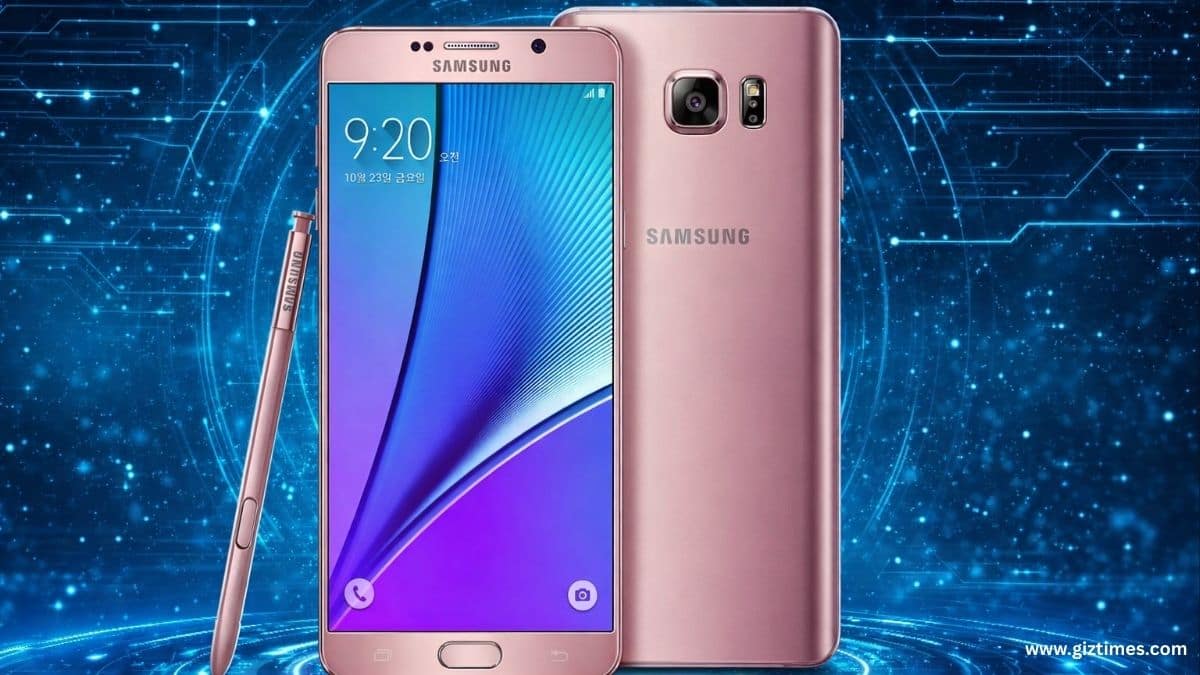
The rear camera featured a 16 MP sensor with an f/1.9 aperture, optical image stabilization and phase detection autofocus. It supported 4K video recording at 30 frames per second and 1080p at 60 frames per second. The front camera was 5 MP with an f/1.9 aperture and could record up to 1440p video. The camera performance was strong for its time, especially in low-light conditions.
The Galaxy Note 5 had a 3000 mAh non-removable battery. It supported wired fast charging and wireless charging using the Qi standard. Although the battery could not be replaced by users, fast charging was considered a useful feature in 2015.
The device launched with Android 5.1.1 Lollipop and Samsung’s TouchWiz interface. It later received updates up to Android 7.0 Nougat. The S Pen remained one of its main highlights. Users could quickly take notes even when the screen was off, use Air Command features and write directly on screenshots. However, early buyers discovered that inserting the S Pen backward could damage the internal detection mechanism, which became a widely discussed issue at launch.
For connectivity, the phone supported 4G LTE, Wi-Fi 802.11 a/b/g/n/ac, Bluetooth 4.1 or 4.2 depending on the variant, GPS and Micro-USB 2.0. It also retained the 3.5 mm headphone jack and had a fingerprint sensor integrated into the front home button.
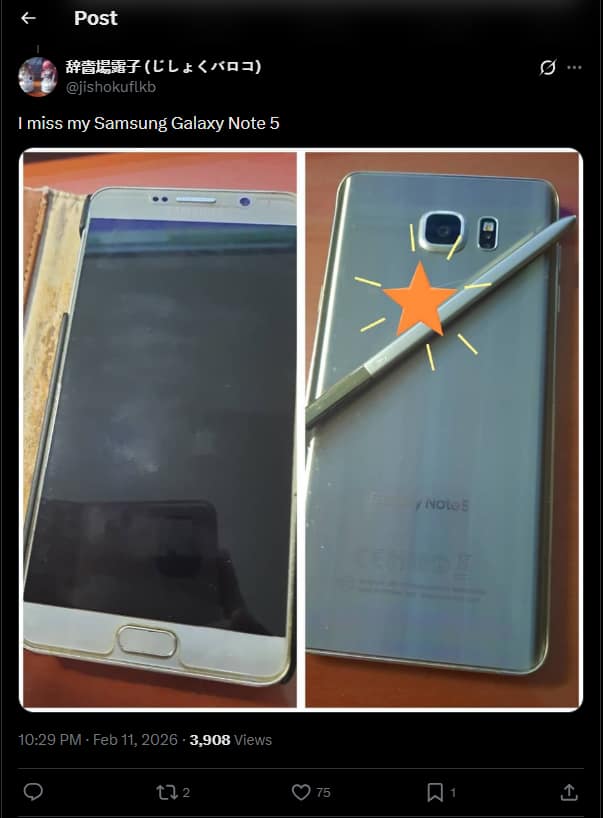
A user on X (Twitter) shared a photo of his old Samsung Galaxy Note 5 and wrote, “I miss my Samsung Galaxy Note 5” in caption, It revives the nostalgia many people still feel for the 2015 flagship. Even years after its release, the Galaxy Note 5 remains special for users who remember it as one of the best phones of its time.
Overall, the Samsung Galaxy Note 5 was one of the most powerful Android smartphones in 2015. It introduced a more premium design and strong performance but removed some features that users had grown used to. Even after being discontinued, it is still remembered as an important step in Samsung’s shift toward glass and metal flagship designs.
